

For years, tachographs have mostly been something HGV drivers had to think about.
But from 1 July 2026, that changes for some courier van drivers.
New rules mean certain vans over 2.5 tonnes will need a Smart Tachograph 2 when used for international courier work. That means more planning, more record-keeping, and stricter rules around driving time, breaks and rest.
For most UK-only courier drivers, nothing changes. But if you take paid cross-border work, European loads or cabotage jobs, the courier tachograph rule is something you’ll need to understand before the deadline.
What we’ll cover
Get access to 15,000+ loads a day on Courier Exchange
Be your own boss. Set your own hours. Make your own money.
What is a tachograph?
A tachograph is a recording device fitted to a vehicle.
It tracks key information about the driver, vehicle and journey, including:
- Driving time
- Breaks
- Rest periods
- Other work
- Distance travelled
- Vehicle movement
- Speed
- Some location data
In simple terms, it helps prove whether a professional driver has followed the rules on driving hours, breaks and rest.
For HGV drivers, using a tachograph is part of the job. They insert a driver card, select the right activity mode, and the tachograph records what they do during the day.
That record can then be checked by the operator, the driver or enforcement officers.
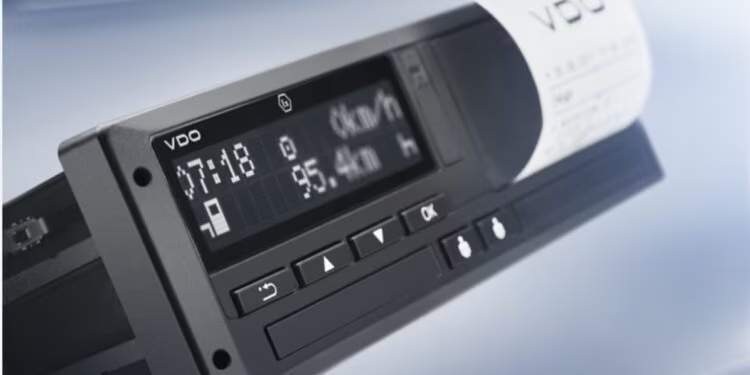
What is Smart Tachograph 2?
The new rules for 2026 specifically refer to Smart Tachograph 2.
This is the latest version of the digital tachograph. It does the same core job as earlier tachographs, recording driving time, breaks, rest and other work.
The difference is that Smart Tachograph 2 is designed for modern cross-border transport.
It can record more information automatically, including border crossings and some loading and unloading activity. It also gives enforcement teams more ways to check compliance, especially during international journeys.
How do HGV drivers use tachographs?
HGV drivers have used tachographs for years because larger goods vehicles are already covered by stricter rules.
These rules are there to reduce tired driving, improve road safety and create a fairer transport market.
A tachograph records different types of driver activity:
| Tachograph record | What it shows |
|---|---|
| Driving | Time spent behind the wheel |
| Breaks | When the driver has stopped driving |
| Rest | Daily and weekly rest periods |
| Other work | Loading, unloading, admin or vehicle checks |
| Availability | Waiting time where the driver is available but not actively working |
For HGV drivers, the tachograph is not just a box in the dashboard.
It shapes how the working day is planned. Drivers and operators need to make sure there is enough time for the journey, the delivery, the return trip, and the required breaks and rest periods.
Why haven’t courier vans needed tachographs before?
Most courier vans have historically sat outside the same tachograph rules as HGVs.
That is because traditional tachograph rules mainly applied to goods vehicles over 3.5 tonnes. Lighter vans usually fell below that threshold, so many courier drivers could work without fitting or using a tachograph.
For domestic courier work, that flexibility has been useful.
But international van work has grown. Larger vans are now often used for urgent cross-border deliveries, European freight movements and time-critical transport.
That has created concerns around:
- Long driving days
- Driver fatigue
- Unfair competition between vans and HGVs
- Harder enforcement of cross-border work
- Cabotage compliance
- Operators using lighter vehicles to avoid rules that heavier vehicles must follow
The issue is not that courier drivers are doing anything wrong.
The issue is that international van work has changed. Regulators now want the rules to reflect how light commercial vehicles are being used.
What are the new tachograph rules from July 2026?
From 1 July 2026, light commercial vehicles between 2.5 tonnes and 3.5 tonnes will need a tachograph when used for international goods transport for hire or reward. The European Commission confirms that light commercial vehicles in this weight range must have a tachograph installed when engaged in international transport for hire or reward from that date.
The European Labour Authority also states that smart tachographs for couriers become mandatory from 1 July 2026 for LCVs between 2.5 and 3.5 tonnes used in international goods transport or cabotage for hire or reward.
That means the rule applies when all of these are true:
- The vehicle is over 2.5 tonnes and up to 3.5 tonnes
- It is used to carry goods
- The work is international or cabotage
- The work is done for hire or reward
For couriers, “hire or reward” usually means paid transport work. If a customer pays you to move goods, that is likely to count.
Does this affect UK-only courier work?
For most UK-only courier drivers, no.
GOV.UK says goods vehicles weighing over 2.5 tonnes and less than 3.5 tonnes that are used only in the UK do not have to have a tachograph fitted.
So if you only carry out courier work within the UK, this rule is unlikely to change your day-to-day work.
But that changes if you start taking paid international work.
If you drive into the EU, carry goods across borders, or complete cabotage work in another country, you may fall into scope of these new courier tachograph rules from July 2026.
What is cabotage?
Cabotage is when a transport operator from one country carries goods between two places inside another country.
For example, a UK courier might deliver goods from the UK to France, then pick up another job that starts and ends within France before returning home.
That second job may count as cabotage, and therefore be subject to cabotage rules.
Cabotage is included in the new 2026 tachograph rules for couriers and light commercial vehicles.
What does this mean for courier drivers?
For affected couriers, the biggest change is not just fitting a device.
The bigger change is how jobs are planned.
If you are doing international work in a van over 2.5 tonnes, you may need to think more carefully about:
- How many hours you can legally drive
- When you need to take breaks
- Whether a long-distance job can be completed by one driver
- How daily rest affects delivery times
- How to use a tachograph driver card
- How to make manual entries
- What records you need to keep
- What happens during a roadside check
This could affect the way some international courier jobs are priced and scheduled.
A job that looked simple on paper may need more time once legal breaks and rest periods are included.
How the rules could change international courier work
The new rules may make international van work more structured.
That could affect both drivers and customers.
| Before July 2026 | From July 2026 for affected work |
|---|---|
| Many van drivers could work without a tachograph | In-scope vans need Smart Tachograph 2 |
| Driving time may have been tracked informally | Driving, rest and work activity must be recorded |
| Planning focused mainly on collection and delivery times | Planning must also include legal breaks and rest |
| Cross-border checks may have been simpler | Drivers need to be ready for tachograph checks |
| Some urgent jobs may have been planned very tightly | Some jobs may need more realistic delivery windows |
For courier businesses that do international work, compliance could become a selling point.
Customers want reliable delivery. But they also want to know the work is being done properly.
If you can show that your vehicle, driver and paperwork are in order, you may be in a stronger position to win work from customers who care about compliance.
What should courier drivers do now?
The July 2026 deadline may feel a long way away.
But if you do international work, it is worth preparing early.
1. Check your vehicle weight
Start with the plated weight of your van.
The new rule focuses on vehicles over 2.5 tonnes and up to 3.5 tonnes.
Do not guess based on the size of the van. Check the official weight plate or vehicle documents.
2. Check whether you do international work
If you only work in the UK, this rule is unlikely to affect you right now.
If you take jobs into Europe, it could.
That includes:
- UK to EU courier work
- EU to UK courier work
- Cross-border European work
- Cabotage work inside another country
- Northern Ireland to Republic of Ireland work
3. Check whether your work is for hire or reward
Most paid courier work will fall under hire or reward.
If you carry goods for customers in exchange for payment, you should assume the rule may apply and check the detail carefully.
4. Understand the own-account exemption
There are some exemptions.
GOV.UK says that if an international journey is for the driver or company’s own account, and driving is not the driver’s main activity, there is no requirement to fit a tachograph.
For most professional courier drivers, this exemption is unlikely to be the main route. But it matters for businesses moving their own goods.
5. Plan for fitting and calibration
If your van is in scope, it will need the correct tachograph fitted and calibrated.
That means booking in with an approved tachograph centre.
Do not leave this until the last minute. As the deadline gets closer, demand for fitting and calibration could increase.
6. Get a tachograph driver card
Drivers need a valid driver card to use a digital tachograph properly.
If you are likely to be in scope, make sure you understand how to apply and how long the process takes.
7. Learn how to use the system
A tachograph is only useful if it is used correctly.
Drivers need to understand:
- How to insert and remove the driver card
- Which mode to select
- How to record other work
- How to record breaks and rest
- How to make manual entries
- What to do if something goes wrong
Mistakes can cause problems during checks, even if the journey itself was planned properly.
What should courier companies keep in mind?
If you run a courier business with multiple vans, the rule is not just a driver issue.
It is an operational issue.
You may need to review:
- Which vehicles are over 2.5 tonnes
- Which vehicles are used for international work
- Which drivers need training
- How tachograph data will be downloaded and stored
- How jobs are planned around driving time limits
- How subcontractors are checked for compliance
- How customers are told about realistic delivery timings
This is especially important if your business takes urgent European and international courier work.
Some jobs may still be possible. But they may need different planning, different pricing, or a different driver schedule.
Key takeaway
The 2026 tachograph rules do not affect every courier van.
If you only carry out courier work within the UK, you are unlikely to need a tachograph just because your van is over 2.5 tonnes.
But if you use a van over 2.5 tonnes for paid international courier work, the rules are changing.
From 1 July 2026, affected vans will need a Smart Tachograph 2. Drivers will also need to understand how to record their work, follow driving time rules and plan jobs around legal breaks and rest.
For UK-only couriers, it may not change anything.
For cross-border courier drivers, it is a major shift in how international van work is managed.
Get access to 15,000+ daily loads on Courier Exchange
Be your own boss. Set your own hours. Make your own money.
Courier tachograph FAQs
Do courier vans need tachographs?
Most UK courier vans do not need tachographs for domestic work.
From 1 July 2026, some vans over 2.5 tonnes will need a Smart Tachograph 2 if they are used for international goods transport or cabotage for hire or reward.
Do tachograph rules apply to UK-only courier work?
For vans over 2.5 tonnes and under 3.5 tonnes used only in the UK, GOV.UK says there is no requirement to fit a tachograph.
What is Smart Tachograph 2?
Smart Tachograph 2 is the latest version of the digital tachograph.
It records driving activity and supports enforcement of international transport rules, including border crossings and driving time compliance.
Do I need a tachograph for courier work in Europe?
You may need one from 1 July 2026 if your van is over 2.5 tonnes and you are carrying goods internationally for hire or reward.